
Engineered for Refractory & Thermal Performance
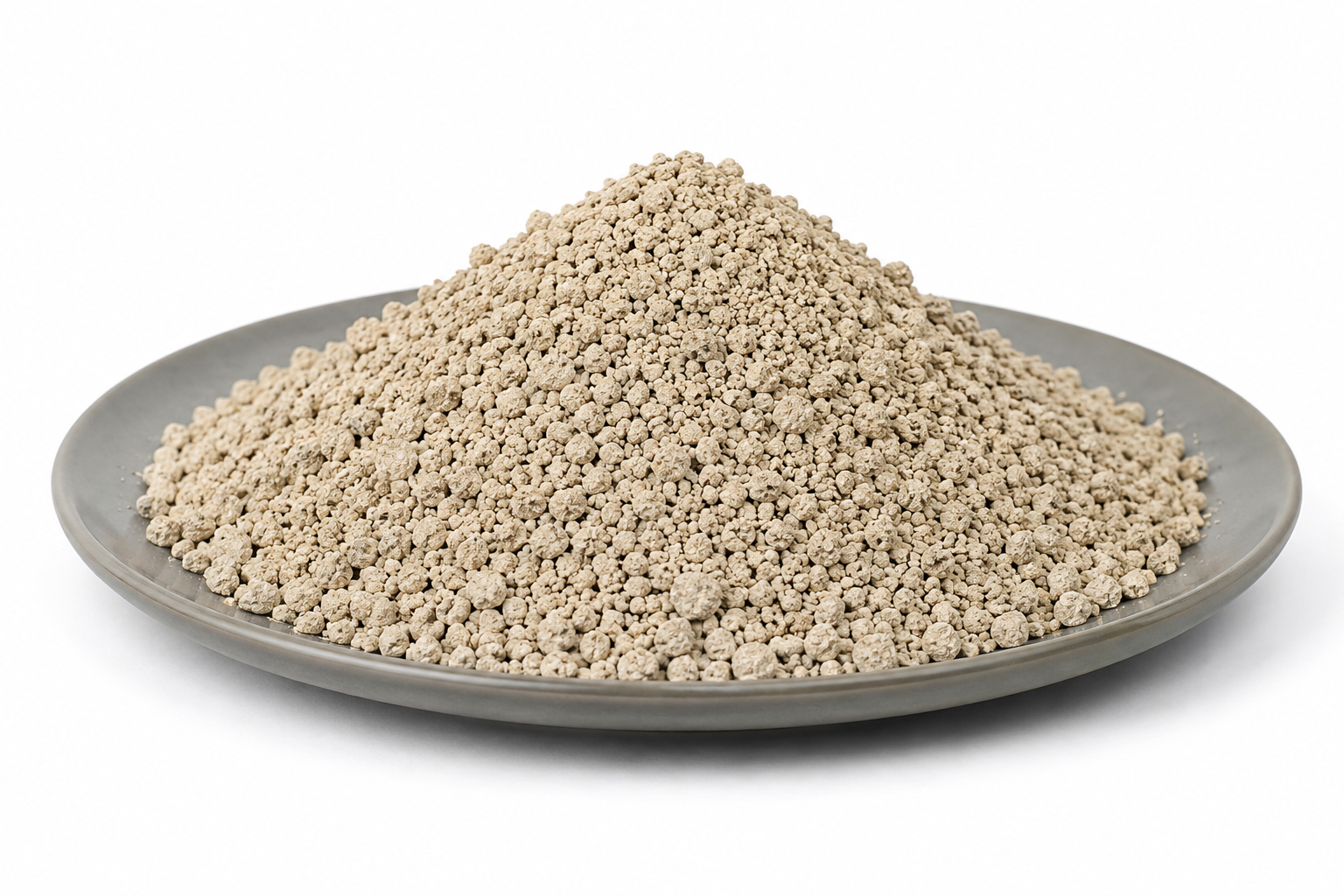
Chamotte (also known as Calcined Clay or Groog) is a premium refractory material produced by calcining high-purity, low-iron fireclays in a rotary kiln at temperatures ranging between 1300°C and 1450°C. This intensive thermal process drives off all structural water and converts the raw clay into a stable, highly crystalline mixture of mullite and amorphous silica, significantly reducing thermal shrinkage.
Key Features
- Zero Structural Shrinkage: The pre-calcined nature of chamotte ensures excellent volume stability and prevents cracking during subsequent firing cycles.
- High Thermal Resistance: Possesses a high melting point and retains structural load-bearing capacity at extreme elevated temperatures.
- Low Thermal Expansion: Minimizes dimensional changes, providing outstanding resistance to severe thermal shock.
- Consistent Particle Size Distribution: Carefully crushed and graded to engineered particle profiles for optimized packing density.
We believe in growth through innovation and sustainability and acting responsibly
- 13 Years of Experience
- Production Standards
- Product Quality, Consistency
- Reliable Customer Service
Industry Applications
| Industry | Primary Function | Benefits |
|---|---|---|
| Refractories | Groog / Structural Skeleton | Used in refractory bricks, castables, and monolithic linings to reduce shrinkage and improve thermal shock resistance. |
| Ceramics & Sanitaryware | Body Component | Prevents warping, twisting, and cracking in large ceramic bodies, tiles, and sanitaryware during firing. |
| Investment Casting | Shell Molding Material | Provides high dimensional accuracy and excellent surface finish for precision investment casting molds. |
| Construction / Mortars | Heat-Resistant Aggregate | Enhances the structural integrity and thermal endurance of high-temperature mortars and fireplaces. |
Applications


Why Choose Our Chamotte?
Our proprietary, high-temperature calcination process guarantees the complete conversion of fireclay into a stable, high-mullite crystalline phase, virtually eliminating residual shrinkage. With rigorous control over kiln chemistry, we ensure exceptionally low iron (Fe2O3) and alkali content, preventing premature vitrification and maintaining excellent refractoriness. Available in precisely engineered grain sizes and fractions, our chamotte provides consistent thermal shock resistance and perfect dimensional predictability for high-performance refractories and technical ceramics.